Published : 2026-01-02
On 2 January 2001, Matsu (馬祖) and Kinmen (金門) held their first direct sailings to the Chinese Mainland in 52 years, which meant that the "Mini-Three Links" (小三通) sea passenger routes officially broke the ice, from then on raising the curtain on direct exchanges between personnel from Fujian and Taiwan.
On that day, 507 residents of Matsu travelled on the "Taima Ferry" from Matsu's Fuao Harbour directly to Fuzhou's Mawei Harbour, officially opening the "Two Mas Route".
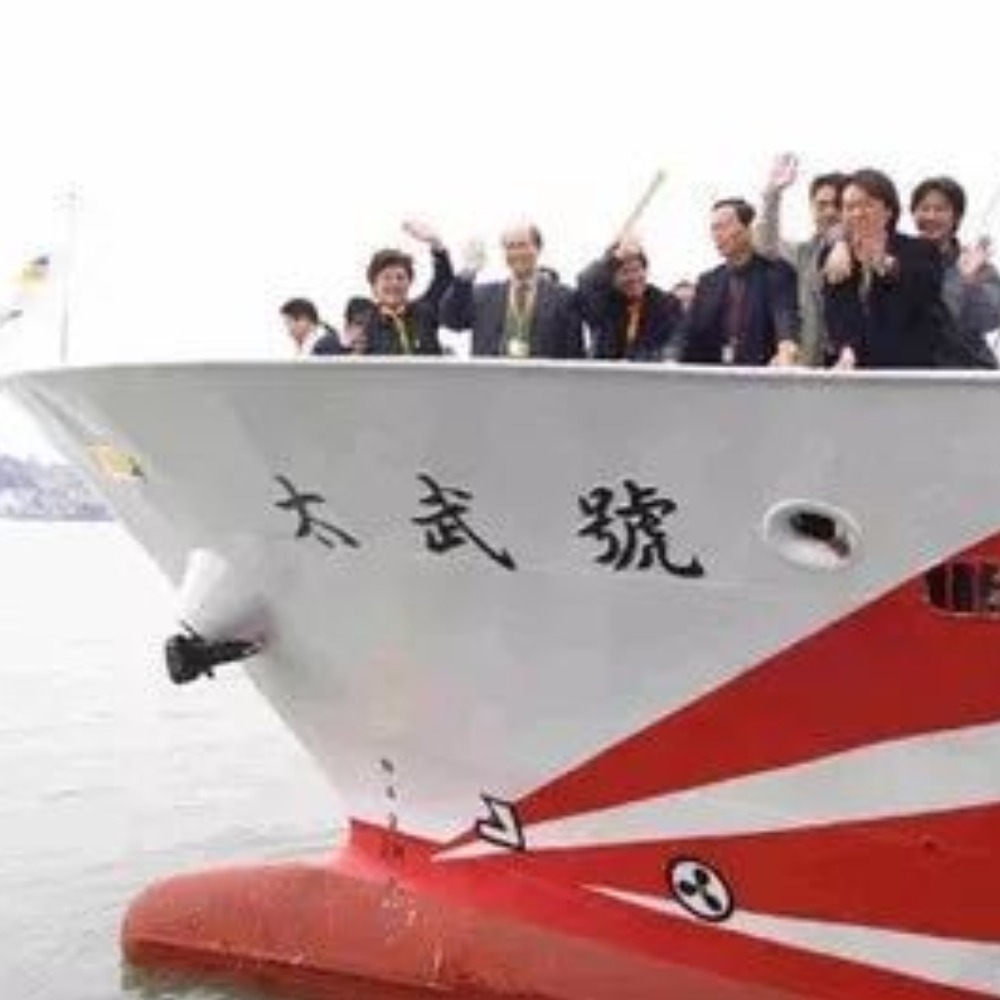
On the same day, 179 residents of Kinmen travelled on the "Taiwu" and "Wujiang" passenger ferries, sailing directly from Kinmen's Liaoluo Harbour to Xiamen's Heping Wharf, marking the maiden voyage of the "Xiamen-Kinmen Route".
The so-called "Mini-Three Links" refers to the "Trial Implementation Measures for Navigation between Kinmen, Matsu and the Mainland Area", which was unilaterally approved by the Taiwan region on 13 December 2000, in the absence of prior cross-strait consultations.
In March 1992, the Chinese Mainland's Fujian Province proposed the "Mini-Three Links" concept. This was because the "Two Mens" (兩門, namely the Chinese Mainland's Xiamen and the Taiwan region's Kinmen) and the "Two Mas" (兩馬, namely the Chinese Mainland's Mawei Harbour and the Taiwan region's Matsu) are all just a stone's throw apart, and conducting the "Three Links" on a small scale here was a method that, under the restrictions of the time, was beneficial to the development of cross-strait civil society.
Before the realisation of the "Mini-Three Links", due to the man-made, unilateral obstruction from the Taiwan region, for a long period of time, the journey home for compatriots on both sides of the strait still required an unnecessary detour, travelling via Hong Kong or Japan.
With the official opening of the "Mini-Three Links", the journey for Taiwanese residents travelling to and from the mainland was greatly shortened and its convenience significantly improved, ushering in a new era for cross-strait exchanges and travel.
Over the years, the Fujian-Taiwan "Mini-Three Links" routes have become a "golden channel" for direct cross-strait travel, hailed by compatriots on both sides as "a bridge for communication, a node for connection, and a bond for integration".
After the opening of the cross-strait "Mini-Three Links", they not only promoted cross-strait economic and trade cooperation, but also invigorated folk and cultural exchanges.
They have also created a two-way interface for tourism, and are powerful proof that "cooperation brings mutual benefits and communication leads to a win-win situation" for both sides of the strait.